Storm-response lead generation, end to end.
Most roofing lead generation is a list someone resells. HailTrigger is the opposite: a storm triggers the system, the system targets the roofs the hail actually hit, and the whole campaign runs — mail, QR, booking, attribution — with evidence you can defend.
- Detection
- Targeting
- Scoring
- Mail + QR
- Attribution
Bought leads and blind canvassing.
Stale, shared lists
Bought leads are resold to five competitors and weeks old by the time you call.
Door-knocking by guess
Crews canvass whole ZIPs hoping they're inside the hit area, burning days on streets the hail missed.
No line to revenue
Even good targeting dead-ends in a spreadsheet. Nobody can say which mailer produced which signed roof.
From storm to signed job.
detection → targeting → scoring → mail → QR booking → attribution
- 01
The storm triggers
Radar confirms a hail swath. HailTrigger decodes the MRMS/NEXRAD footprint — the maximum-estimated-hail-size polygon, in inches.
- 02
Parcels inside the swath
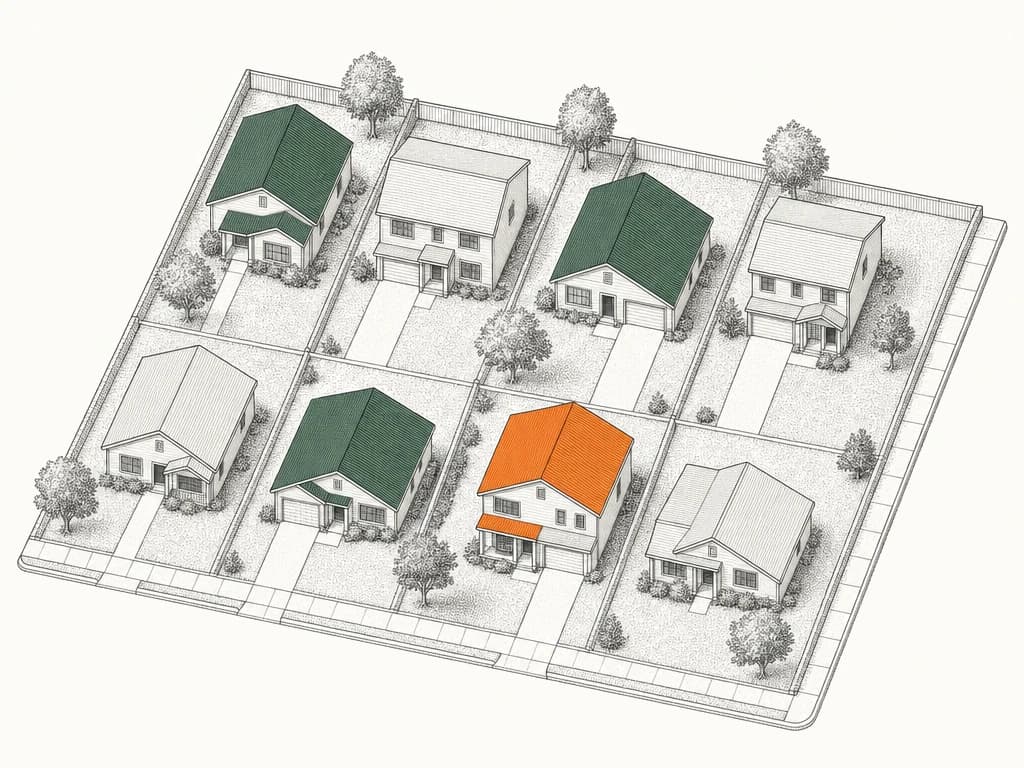
Every property whose geometry falls inside the swath becomes a candidate. Proximity is not containment — the addresses the hail missed stay out.
- 03
Each roof is scored
Hail size at the address, roof age, and the repair permit that was never pulled — evidence verified per parcel before anything prints.
- 04
Mailers print, gated
Postcards with a unique QR go to print only when spend is reserved, proof is approved, and the weather clears.
- 05
QR books the inspection
The homeowner lands on a page about their roof and books an inspection in a few taps — no phone tree.
- 06
Attribution closes the loop
The signed job ties back to the storm and the mailer that produced it. You know which piece paid for itself.
Public data, honest claims.
The targets are built on NOAA radar, county parcels, and municipal permits — public, re-runnable, citable. If a claim couldn't survive an insurer's or an attorney general's scrutiny, we don't make it.
Enforced in the system
- Hail confirmed at the address
- Swath containment, not proximity
- Public, re-runnable sources
Never asserted
- That the roof is damaged
- A claim the inspection hasn't made
- Anything you couldn't cite